Showing posts with label Broomweed. Show all posts

Thursday, September 15, 2016

Fields of Gold


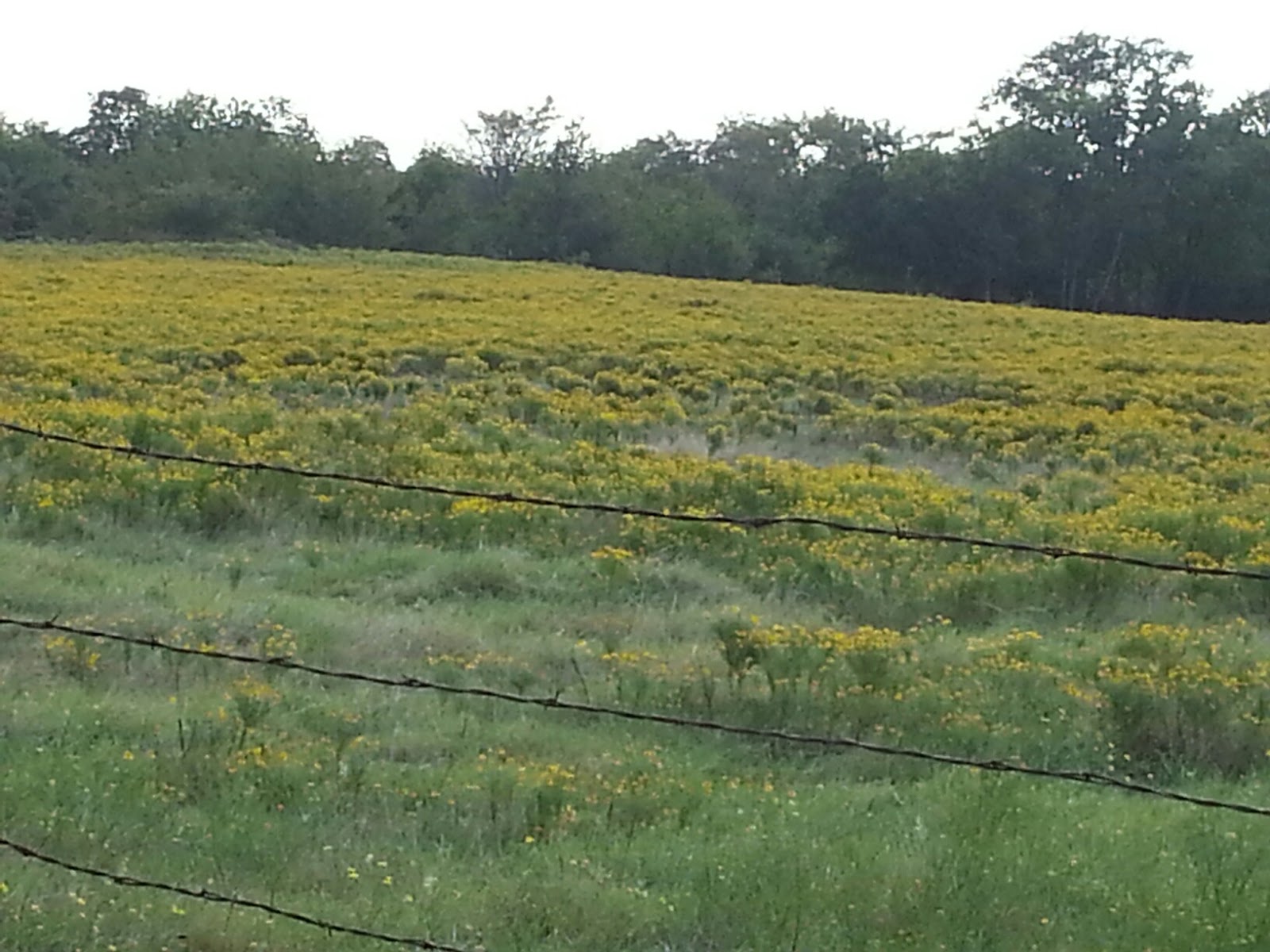
Bitterweed in Field along Lawrence Lane, by Sue Malnory
A number of fields along the roadsides on the way to Hagerman National Wildlife Refuge are blanketed with gold! Gold wildflowers that is...And this year, according to the Lady Bird's Native Plant Database, what we are seeing is Helenium amarum, commonly called Yellow Sneezeweed, Bitterweed, Yellow bitterweed, Yellowdicks, Slender-leaved sneezeweed, Fine-leaved sneezweed, and/or Yellow dog-fennel. A member of the aster family, "The genus is thought to have been named by Linnaeus for Helen of Troy. The legend is that the flowers sprung up from the ground where her tears fell."  The plant is an annual and is valuable to Native Bees and tolerant of dry conditions and varied soil types.

Bitterweed by Sue Malnory

In years past the gold was provided by another member of the aster family is Gutierrezia sarothrae, with common names that include Broom snakeweed, Kindlingweed, Matchbrush, Texas snakeweed, Broomweed, Turpentine weed. Growing from 1 – 3’ tall, it is a small shrub-like plant covered in tiny yellow flowers. By bloom time the lower leaves have dropped off, giving it a delicate appearance.

Broomweed, by Dick Malnory


Broomweed is native throughout much of the western U.S. and blooms from August – November. It reproduces by seed and provides nectar for bees and butterflies and seed for birds. Dried plants can be tied together to fashion a “broom”.

Another yellow autumn wildflower, one that is considered a “bad actor” by many, is Goldenrod, Solidago canadensis L., also called Canada goldenrod, Canadian goldenrod, Tall goldenrod, or Giant goldenrod. Goldenrod is blamed for causing allergic reactions each fall, but according to NPIN, the reactions are caused mainly by pollen from the ragweed plant that blooms at the same time.

Goldenrod, by Dick Malnory

Finally, there is also a burst of gold in the Butterfly Garden at Hagerman - Maximilian sunflower, a cheery yellow wildflower blooms that from August to October and provides food  as a range plant, and seed and cover for wildlife. Helianthus maximiliani Schrad., called Maximilian sunflower, Max sunflower and Michaelmas-daisy, was named for the German explorer and naturalist, Prince Maximilian, according to the Lady Bird Johnson Wildflower Center native plant data-base. Maximilian explored the Great Plains of the U.S. in 1832.

Maximilian Sunflowers in the Garden by Sue Malnory

"I cannot endure to waste anything as precious as autumn sunshine by staying in the house.  So I spend almost all the daylight hours in the open air."
-  Nathaniel Hawthorne


Note- Portions of this post were originally published on October 4, 2012, and October 9. 2014.

Thursday, October 22, 2015

Golden Fields

Fence rows  and fields in North Texas and at Hagerman National Wildlife Refuge have been glowing with “gold” at this time of year.  Several wildflower favorites are contributing to this fall palette.

Maximilian sunflower is a cheery yellow wildflower that blooms   from August to October and provides food for livestock, as a range plant, and seed and cover for wildlife. Helianthus maximiliani Schrad., called Maximilian sunflower, Max sunflower and Michaelmas-daisy, was named for the German explorer and naturalist, Prince Maximilian, according to the Lady Bird Johnson Wildflower Center native plant database.  Maximilian explored the Great Plains of the U.S. in 1832.


Maximilian sunflower, by Sue Malnory
Max sunflower is a prairie perennial native to the eastern U.S. and grows throughout the U. S. as an introduced species and ornamental.  Recognizable by multiple blooms along the unbranched, upright stalk It grows from 24” to 10’ tall, and reproduces by seed and by sprouting from the rhizome, which is edible.  In addition to seed, it also provides nectar for bees and butterflies.

Also in the aster family is Gutierrezia sarothrae, with common names that include Broom snakeweed, Kindlingweed, Matchbrush, Texas snakeweed, Broomweed, Turpentine weed.  Growing from 1 – 3’ tall, it is a small shrub-like plant covered in tiny yellow flowers.  By bloom time the lower leaves have dropped off, giving it a delicate appearance. 

Broomweed, by Dick Malnory
Broomweed is native throughout much of the western U.S. and blooms from August – November.  It reproduces by seed and provides nectar for bees and butterflies and seed for birds.  Dried plants can be tied together to fashion a “broom”.

Another yellow autumn wildflower, one that is considered a “bad actor” by many, is Goldenrod, Solidago canadensis L., also called Canada goldenrod, Canadian goldenrod, Tall goldenrod, or Giant goldenrod.  Goldenrod is blamed for causing allergic reactions each fall, but according to NPIN, the reactions are caused mainly by pollen from the ragweed plant that blooms at the same time.


Goldenrod, by Dick Malnory
Goldenrod grows 3 – 6’ tall, and like the Maximilian sunflower, is perennial.  It provides nectar for bees and butterflies and produces seeds.  It will grow in most any soil and is tolerant of dry or moist conditions,   Goldenrod is  a native plant found  in Canada and across the U. S. and blooms September – November.

So, using the phrase in a different context, "Go for the Gold"  and enjoy the view.

"I cannot endure to waste anything as precious as autumn sunshine by staying in the house.  So I spend almost all the daylight hours in the open air."
-  Nathaniel Hawthorne

This post was originally published on October 4, 2012.


Thursday, October 4, 2012

Fields of Gold


Roadsides and fields in North Texas and at Hagerman National Wildlife Refuge are glowing with “gold” at this time of year.  Several wildflower favorites are contributing to this fall palette.

Maximilian sunflower is a cheery yellow wildflower blooms that  from August to October and provides food for livestock, as a range plant, and seed and cover for wildlife.  Helianthus maximiliani Schrad., called Maximilian sunflower, Max sunflower and Michaelmas-daisy, was named for the German explorer and naturalist, Prince Maximilian, according to the Lady Bird Johnson Wildflower Center native plant data-base.  Maximilian explored the Great Plains of the U.S. in 1832.


Maximilian sunflower, by Sue Malnory
Max sunflower is a prairie perennial native to the eastern U.S. and grows throughout the U. S. as an introduced species and ornamental.  Recognizable by multiple blooms along the unbranched, upright stalk It grows from 24” to 10’ tall, and reproduces by seed and by sprouting from the rhizome, which is edible.  In addition to seed, it also provides nectar for bees and butterflies.

Also in the aster family is Gutierrezia sarothrae (Pursh) Britt. & Rusby, with common names that include Broom snakeweed, Kindlingweed, Matchbrush, Texas snakeweed, Broomweed, Turpentine weed.  Growing from 1 – 3’ tall, it is a small shrub-like plant covered in tiny yellow flowers.  By bloom time the lower leaves have dropped off, giving it a delicate appearance. 

Broomweed, by Dick Malnory

Broomweed is native throughout much of the western U.S. and blooms from August – November.  It reproduces by seed, and provides nectar for bees and butterflies and seed for birds.  Dried plants can be tied together to fashion a “broom”.

Another yellow autumn wildflower, one that is considered a “bad actor” by many, is Goldenrod, Solidago canadensis L., also called Canada goldenrod, Canadian goldenrod, Tall goldenrod, or Giant goldenrod.  Goldenrod is blamed for causing allergic reactions each fall, but according to NPIN, the reactions are caused mainly by pollen from the ragweed plant that blooms at the same time.


Goldenrod, by Dick Malnory
Goldenrod grows 3 – 6’ tall, and like the Maximilian sunflower, is perennial.  It provides nectar for bees and butterflies, and produces seeds.  It will grow in most any soil and is tolerant of dry or moist conditions,   Goldenrod is  a native plant found  in Canada and across the U. S. and blooms September – November.

So, using the phrase in a different context, "Go for the Gold"  and enjoy the view.

"I cannot endure to waste anything as precious as autumn sunshine by staying in the house.  So I spend almost all the daylight hours in the open air."
-  Nathaniel Hawthorne